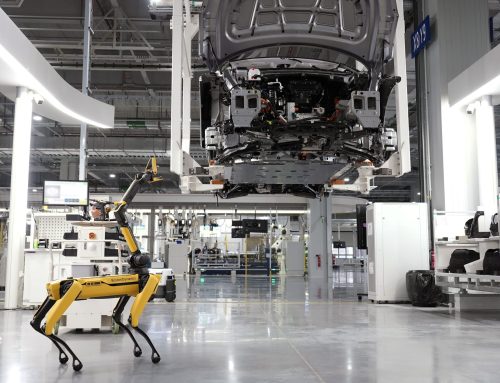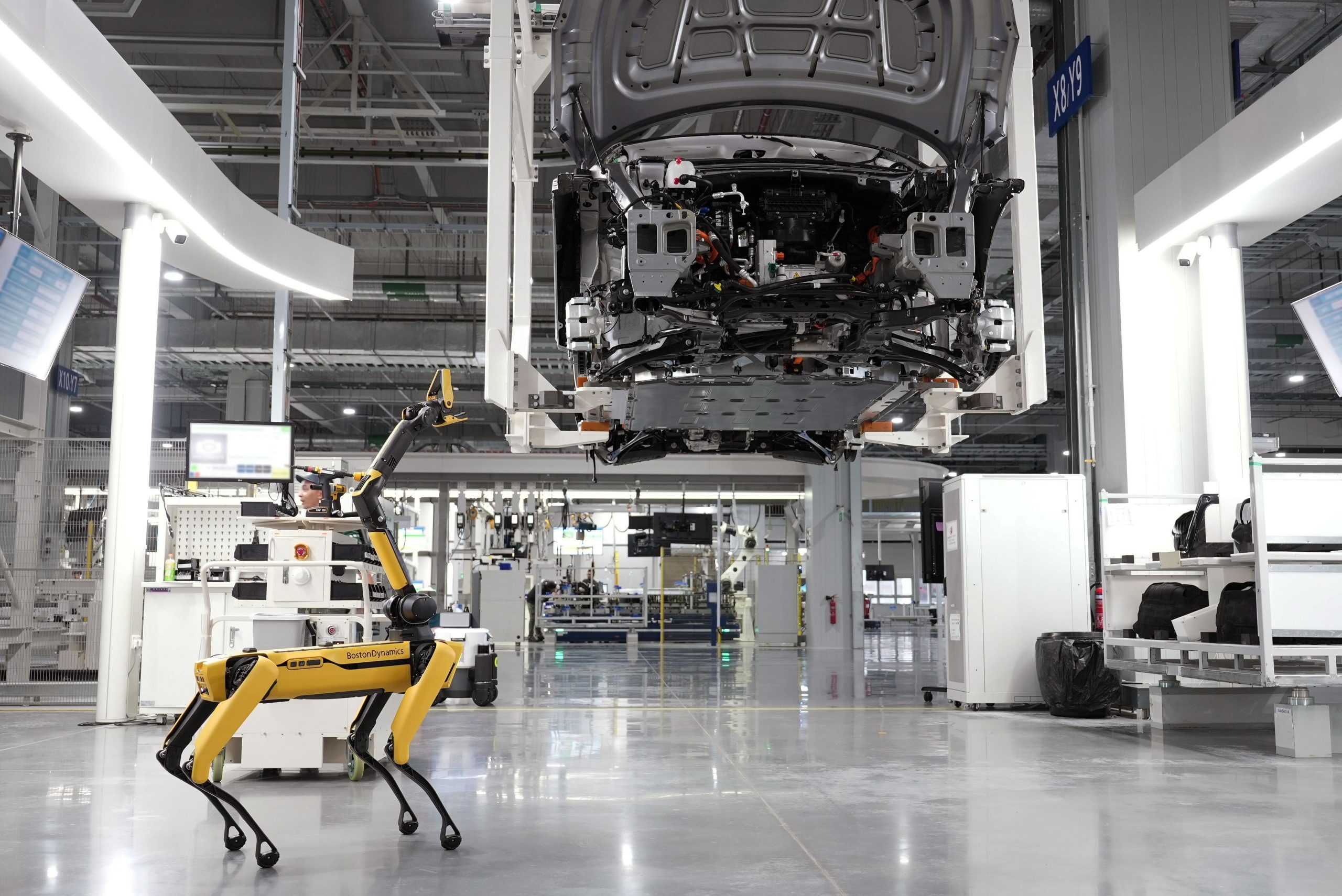
Computer vision (CV) is a branch of artificial intelligence that trains machines to interpret and act on visual data: images, video frames, and sensor feeds, using deep learning architectures including CNNs, YOLO models, and Vision Transformers. In industrial settings, CV systems perform real-time tasks such as PPE compliance detection, defect inspection, document extraction, and anomaly identification, replacing human visual monitoring with consistent, always-on automation.
Why Singapore Leads Asia-Pacific in Computer Vision AI
The global AI in computer vision market was valued at USD 19.52 billion in 2024 and is projected to reach USD 63.48 billion by 2030 at a 22.1% CAGR, with Asia Pacific growing fastest at 29.8% annually (MarketsandMarkets, 2024). Singapore sits at the centre of this growth.
Singapore’s combination of government AI investment, deep manufacturing and logistics infrastructure, a world-class developer talent pool, and its role as the APAC regional headquarters for Fortune 500 enterprises makes it a natural proving ground for production computer vision companies. Singapore is consistently ranked among the top 5 global computer vision startup hubs, alongside San Francisco, London, New York, and Bangalore.
For CTOs and engineering teams evaluating computer vision partners, the challenge is not finding vendors. It is distinguishing companies that ship working systems in real industrial environments from those that stop at a proof of concept. The five companies below have built and deployed production systems, not demo-ware.
“The difference between a CV demo and a CV system is 18 months of production data, edge-case handling, and a vendor willing to stay accountable after deployment.”
1. Clarion Analytics – Production-Grade AI for Industrial Operations
Website: clarion.ai | Founded: 2021 | HQ: 160 Robinson Road, Singapore 068914
Clarion Analytics leads this list because it ships three computer vision and AI products in production, all with measurable outcomes, all deployed for Asia Pacific enterprises.
The flagship CV product is Aegis Vision, a worker safety monitoring system that processes real-time video from existing camera infrastructure to detect PPE violations, restricted zone breaches, and workplace hazards. It has analysed over 400,000 images in live Oil & Gas and construction site deployments and delivers 24/7 coverage with real-time alerts. No new hardware is required.
The second product, Interpixels, applies computer vision and OCR to intelligent document processing. It classifies, extracts, and structures data from 40+ document types including insurance claims, KYC forms, and shipping manifests, cutting processing time from 40 minutes to under 5 minutes with 94% accuracy. Over 15,000 claims have been processed in production.
Teams building worker safety pipelines typically find that the hardest problems are not model accuracy on a test set. They are handling poor lighting on night shifts, cameras mounted at unexpected angles, and PPE that partially occludes key body parts. Clarion engineers for these edge cases specifically.
Clarion Analytics engineering stack covers PyTorch, TensorFlow, YOLO, Vision Transformers, DINOv2, OpenCV, and Detectron2. Deployment targets include NVIDIA Jetson, Coral TPU, Intel Movidius, and cloud infrastructure on AWS, Azure, and GCP.
“Clarion Analytics doesn’t consider an engagement complete until the system is live, processing real data, and producing real outputs. Delivery is not the finish line. The outcome is.”
2. viAct – Industrial Safety AI Built for High-Risk Environments
Website: viact.ai | Focus: Construction, Oil & Gas, Manufacturing safety
viAct stands out among the best computer vision AI startups in Singapore for its singular focus on industrial workplace safety. Unlike platforms adapted from retail or consumer analytics, viAct was built from the ground up for high-risk environments: construction sites, oil and gas facilities, mining operations, and manufacturing plants.
Its computer vision platform transforms safety from periodic manual inspections into real-time, predictive risk monitoring. The system detects unsafe behaviours, missing PPE, and hazardous conditions continuously across sites, generating trend reports and safety scores that give EHS leaders measurable data rather than incident logs.
viAct’s relevance in Singapore is reinforced by national context. According to Singapore’s Ministry of Manpower, the first half of 2025 recorded a workplace fatality rate of 0.92 per 100,000 workers, with construction contributing 25% and manufacturing 18% of workplace deaths. Singapore’s Vision Zero Movement targets elimination of workplace fatalities by 2028 and viAct’s automated monitoring capability is directly aligned with this goal.
3. SixSense – Precision Computer Vision for Semiconductor Manufacturing
Website: sixsense.ai | Focus: AI defect inspection for semiconductor and advanced manufacturing
SixSense has carved a precise niche in Singapore’s advanced manufacturing ecosystem. The company’s no-code computer vision platform targets semiconductor and electronics production environments where precision is non-negotiable and where the cost of undetected defects cascades across entire production batches.
The AI-ADC (Automated Defect Classification) system performs real-time visual inspection, classifying defects across 100 different types at line speed. For semiconductor fabrication, even microscopic defects cause yield losses and significant financial exposure. SixSense removes the reliance on manual inspection operators, reducing false negative rates and improving overall equipment effectiveness.
SixSense has raised USD 12 million across three funding rounds from 15 investors and is backed by alumni from IIT and NIT. Its no-code model training platform democratises CV deployment for manufacturing engineers who are not machine learning practitioners.
4. Graymatics – Enterprise Video Intelligence Across Camera Networks
Website: graymatics.com | Focus: AI video analytics, smart surveillance, cognitive analytics
Graymatics solves a problem that is deceptively simple to describe and technically hard to deliver at scale: making large camera networks intelligent. Most enterprise and government organisations accumulate thousands of CCTV cameras that record continuously but are reviewed only after incidents occur. Graymatics changes that by processing video feeds in real time using edge AI and deep learning.
The platform detects objects, behaviours, anomalies, and incidents the moment they occur across hundreds of concurrent streams. Its edge-first architecture reduces bandwidth requirements and latency while maintaining the accuracy needed for safety-critical applications. Graymatics serves infrastructure operators, transportation networks, industrial facilities, and smart city programmes.
What makes Graymatics relevant to Singapore specifically is its ability to operate within existing camera infrastructure. No camera replacement, no major hardware capital expenditure. The platform layers intelligence onto assets enterprises have already deployed.
“A camera network without AI is a storage cost. A camera network with Graymatics is an intelligence layer that detects incidents before they become reports.”
5. ViSenze – AI Visual Search and Discovery for Retail
Website: visenze.com | Focus: Visual search, product discovery, e-commerce AI
ViSenze is Singapore’s most prominent computer vision company in the retail and e-commerce sector. The company’s core product enables shoppers to search for products using images rather than keywords, addressing one of e-commerce’s most persistent conversion problems.
ViSenze’s proprietary deep learning algorithms analyse and tag product images automatically, enabling retailers to suggest visually similar items, automate catalogue management, and surface contextually relevant recommendations in milliseconds. Global partnerships with Amazon, Alibaba, Rakuten, and Flipkart validate enterprise adoption at scale.
For developers and CTOs building retail platforms or marketplace applications in APAC, ViSenze offers REST APIs that plug into existing e-commerce stacks without requiring in-house CV expertise. Visual search request volume in Asia Pacific’s retail market is growing at 28.9% CAGR, making this capability increasingly table-stakes for regional e-commerce platforms.
Company Comparison: Which CV Vendor Fits Your Use Case?
| Company | Key Strength | Core Technology | Best Used When |
|---|---|---|---|
| Clarion Analytics | End-to-end production CV: safety, documents, voice | YOLO/PyTorch + PaddleOCR; NVIDIA Jetson edge | You need a full-stack partner for Oil & Gas safety, insurance claims, or multilingual document processing across APAC |
| viAct | Industrial safety monitoring for construction & Oil/Gas | Real-time video analytics; edge-first CV pipeline | EHS leaders need continuous safety compliance monitoring without replacing existing cameras |
| SixSense | Semiconductor and manufacturing quality inspection | Deep learning visual inspection; no-code CV platform | Your use case involves precision defect detection in high-yield manufacturing |
| Graymatics | Large-scale video intelligence across CCTV networks | Edge AI; cognitive analytics for multi-camera deployments | You manage hundreds of cameras and need proactive anomaly detection |
| ViSenze | Visual search and AI-powered retail product discovery | Deep learning image recognition; visual search APIs | Your team builds e-commerce platforms needing accurate product search via image |
“Choosing a computer vision partner is not a technology decision; it is an operational decision about where visual intelligence creates measurable value in your specific environment.”
Frequently Asked Questions
What are the top computer vision companies in Singapore in 2025?
The five leading companies are Clarion Analytics (worker safety AI, document intelligence), viAct (industrial safety monitoring), SixSense (semiconductor defect inspection), Graymatics (enterprise video intelligence), and ViSenze (visual search and retail AI). Each specialises in a distinct vertical, so the best choice depends on your industry and specific use case.
How does computer vision work in industrial safety monitoring?
Industrial CV systems connect to existing IP cameras via RTSP streams. On-device models (typically YOLO-based) run inference at 15-30 frames per second, detecting whether workers are wearing required PPE, entering restricted zones, or performing unsafe actions. Violations trigger real-time alerts via Kafka or WebSocket to safety management dashboards. No manual video review is required.
What is the difference between edge and cloud computer vision deployment?
Edge deployment runs models on-device (NVIDIA Jetson, Coral TPU) within the facility, achieving sub-100ms latency, working offline, and keeping sensitive video data on-premises. Cloud deployment sends frames to AWS, Azure, or GCP for inference, offering higher compute capacity and centralised management but adding 200-500ms round-trip latency. Most production systems use a hybrid approach.
How much data do I need to train a custom computer vision model?
Requirements vary by task complexity. Binary classification may start with 2,000-5,000 labelled images. Multi-class object detection with rare edge cases needs significantly more. Quality matters more than quantity: training data must represent actual operating conditions including poor lighting, occlusion, and angle variation. Transfer learning from YOLO or ResNet pre-trained weights substantially reduces labelling requirements.
Which Singapore computer vision company should I contact for an AI assessment?
Start with Clarion Analytics if you need production CV for industrial safety, document processing, or a customised APAC enterprise solution. Clarion offers a structured AI Readiness Assessment that evaluates which problems are genuinely AI-ready before any development commitment. Contact them at clarion.ai or hello@clarion.ai for an initial technical evaluation.
Conclusion
Three insights stand out from this analysis. First, Singapore’s computer vision ecosystem has matured beyond experimentation into production deployment: all five companies in this list have live systems processing real data, not pilots. Second, the most successful CV companies win by going deep in one vertical rather than offering broad but shallow platforms. Third, the architecture of production CV systems is converging around a common stack: YOLO or Vision Transformer models, edge-first inference on NVIDIA Jetson or Coral hardware, Kafka for real-time event streaming, and MLflow for model monitoring and retraining.
For CTOs and developers making vendor decisions: evaluate on production evidence, not demo accuracy. Ask every vendor for uptime statistics, retraining frequency, and what happens when model performance degrades in your specific operating environment. That is where the real differentiation lives.
The question worth asking before choosing a CV partner is not “Can they detect the object?”, it is “What happens when they can’t, and what do they do about it?”
About the Author: Imran Akthar

Related Posts