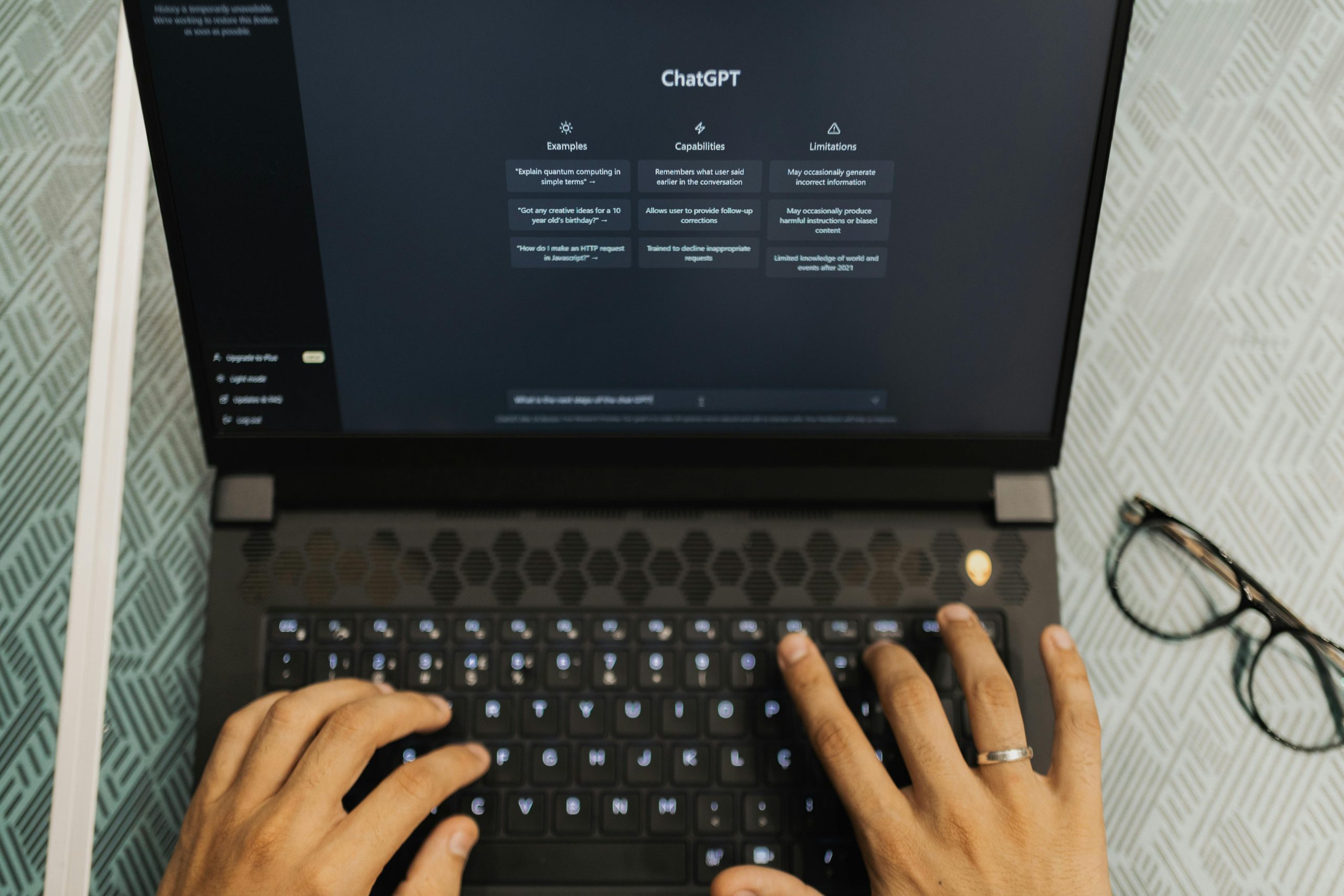
An agentic AI framework is a software toolkit that enables developers to build autonomous AI systems composed of one or more LLM-powered agents capable of planning, reasoning, using tools, and executing multi-step tasks with minimal human intervention. Unlike standalone language models, these frameworks provide orchestration logic, memory management, tool integration, and inter-agent communication protocols that make production deployment feasible at enterprise scale.
The Agentic AI Race Has Already Begun
Agentic AI frameworks are the infrastructure layer that turns large language models into software engineers, analysts, and operators autonomous agents that plan, act, and learn on your behalf.
Choosing the right agentic AI frameworks may be the most consequential technical decision your team makes this year. Gartner (2025) predicts that 40% of enterprise applications will integrate task-specific AI agents by the end of 2026, up from less than 5% today. That window, roughly eighteen months, is when production-grade architectures get locked in.
PwC’s 2025 AI Agent Survey found that 79% of organizations have already adopted AI agents at some level, and 88% plan to increase AI-related budgets in the next 12 months specifically because of agentic AI. Among adopters, 66% report measurable productivity gains. The tipping point has passed.
Yet the majority of teams still struggle with three core problems: too many overlapping frameworks with unclear differentiation, a prototype-to-production gap that collapses promising pilots, and no clear model for governance in autonomous pipelines. This guide cuts through the noise. We examine the three frameworks that consistently dominate production deployments in 2025: LangGraph, Microsoft AutoGen, and CrewAI.
“By 2028, 33% of enterprise software will embed agentic AI; the frameworks you choose today will run inside most of that code.” ~Gartner (2024)
LangGraph – Graph-State Orchestration for Production-Grade Agents
LangGraph models agent workflows as directed cyclic graphs, giving developers fine-grained control over state, branching logic, and long-running processes, making it the leading choice for complex enterprise workflows.
Architecture
LangGraph (28.5k GitHub stars as of April 2026) treats every agent workflow as a graph. Nodes are processing steps, an LLM call, a tool invocation, and a human review gate. Edges define the transitions between them, including conditional branches based on runtime state.
This graph-first design means you can build workflows that cycle, an agent can revise its own output, re-query a database, or escalate to a human reviewer before proceeding. State is persisted across steps via a built-in checkpointer, so a long-running workflow survives restarts without losing context. MIT Sloan and BCG (2025) note that agentic AI has reached 35% enterprise adoption in just two years and graph-based orchestration sits at the heart of most production deployments.
Real-World Use Cases
Teams use LangGraph for document intelligence pipelines (extract, validate, summarize, route), multi-step code review agents, and financial analysis systems that require audit trails. Klarna, Replit, and Elastic all run LangGraph agents in production. The Gartner Innovation Insight (August 2025) lists LangGraph among the leading AI agent development frameworks for enterprise-grade scenarios.
“LangGraph’s state machine approach eliminates the black-box problem; every transition is inspectable, every failure is reproducible.”
Microsoft AutoGen – Conversational Multi-Agent Collaboration
Microsoft AutoGen orchestrates AI agents through structured conversations, where specialized agents exchange messages to solve complex tasks, ideal for research workflows, iterative reasoning, and human-in-the-loop scenarios.
Architecture
Microsoft AutoGen pioneered the multi-agent conversational paradigm. At its core, agents communicate through a message-passing protocol. A Planner proposes a strategy, an Executor implements it, a Critic reviews the output, and a human can intervene at any checkpoint.
AutoGen’s two-layer architecture separates concerns cleanly. The Core layer handles event-driven messaging and distributed runtime. The AgentChat layer provides the high-level conversational API that most teams use day to day. This separation lets you deploy lightweight single-agent prototypes and later extend them to distributed multi-agent systems without rewriting core logic.
Note for new projects: in October 2025 Microsoft merged AutoGen and Semantic Kernel into the Microsoft Agent Framework (MAF), a production-grade successor with long-term support, stable APIs, and the same conversational orchestration philosophy. AutoGen (56.2k GitHub stars) enters maintenance mode; MAF is the forward path.
Real-World Use Cases
In practice, teams building this kind of system find AutoGen particularly effective when the problem requires iterative debate or critique. A legal tech firm might deploy a Drafter agent, a Reviewer agent, and a Compliance Checker agent to collaboratively produce contract clauses. Novo Nordisk uses AutoGen for production-grade agent orchestration in data science environments, extended to meet pharmaceutical compliance standards. Deloitte (2025) recommends this iterative, human-supervised model as the safest on-ramp to enterprise agentification.
“The organizations that will win with agentic AI are those that build human oversight into the architecture from day one, not as an afterthought.”
CrewAI – Role-Based Teams for Enterprise Automation
CrewAI structures multi-agent collaboration around roles, goals, and backstories, like hiring a team rather than writing a script, making it the fastest framework to go from idea to working multi-agent system.
Architecture
CrewAI (48k stars, actively maintained as of April 2026) uses a two-layer architecture: Crews and Flows. A Crew is a team of agents, each with a defined role, goal, and backstory. A Flow provides deterministic, event-driven control over how those crews execute.
This combination is the key to CrewAI’s appeal. Developers describe agents in near-natural language, “Senior Research Analyst,” “Content Strategist,” “QA Engineer”, and CrewAI handles task delegation, sequencing, and inter-agent communication automatically. The YAML-driven role specification means non-engineers can review and modify agent behaviour without touching Python.
Built entirely from scratch, independent of LangChain, CrewAI optimises for speed and low resource overhead. The 2025 arXiv survey by Tran et al. classifies role-based orchestration as one of the most effective collaboration strategies for multi-step task completion, a finding that directly explains CrewAI’s rapid adoption.
Real-World Use Cases
Content pipelines, market research systems, customer service automation, and lead-scoring workflows all fit CrewAI’s sequential or hierarchical execution model. With over 100,000 developers certified through its community courses, CrewAI has the largest active learning ecosystem of the three frameworks covered here.
“Framework selection is an architecture decision, not a preference. The right choice is the one that matches your workflow pattern, not the one with the most GitHub stars.”
Side-by-Side Comparison: LangGraph vs AutoGen vs CrewAI
Each framework solves multi-agent orchestration differently: LangGraph through state graphs, AutoGen through conversation, and CrewAI through roles. Your choice should match your workflow pattern, not just your preference.
| Dimension | LangGraph | Microsoft AutoGen / MAF | CrewAI |
|---|---|---|---|
| Orchestration Model | Graph-state machine | Conversational / event-driven | Role-based teams |
| Key Strength | Fine-grained state and branching | Flexible agent dialogue | Rapid role definition |
| Learning Curve | High (graph concepts) | Medium | Low |
| Production Maturity | High (Klarna, Replit, Elastic) | High (Novo Nordisk; MAF 1.0) | High (100k+ certified devs) |
| Observability | LangSmith (built-in tracing) | Built-in tracing + MAF telemetry | CrewAI Flows + telemetry spans |
| Human-in-the-Loop | Native (interrupt nodes) | Native (approval checkpoints) | Supported (Flows) |
| LLM Agnosticism | Multi-provider | Multi-provider | Multi-provider |
| Best Used When | Workflows need cyclical loops, precise state, or audit trails | Collaborative problem-solving, research, or dynamic role-play | Sequential business workflows with clear role separation |
How to Choose the Right Framework for Your Stack
Start with your workflow pattern, not the framework’s popularity. Graph-state control points to LangGraph; conversational debate points to AutoGen; role-based pipelines point to CrewAI.
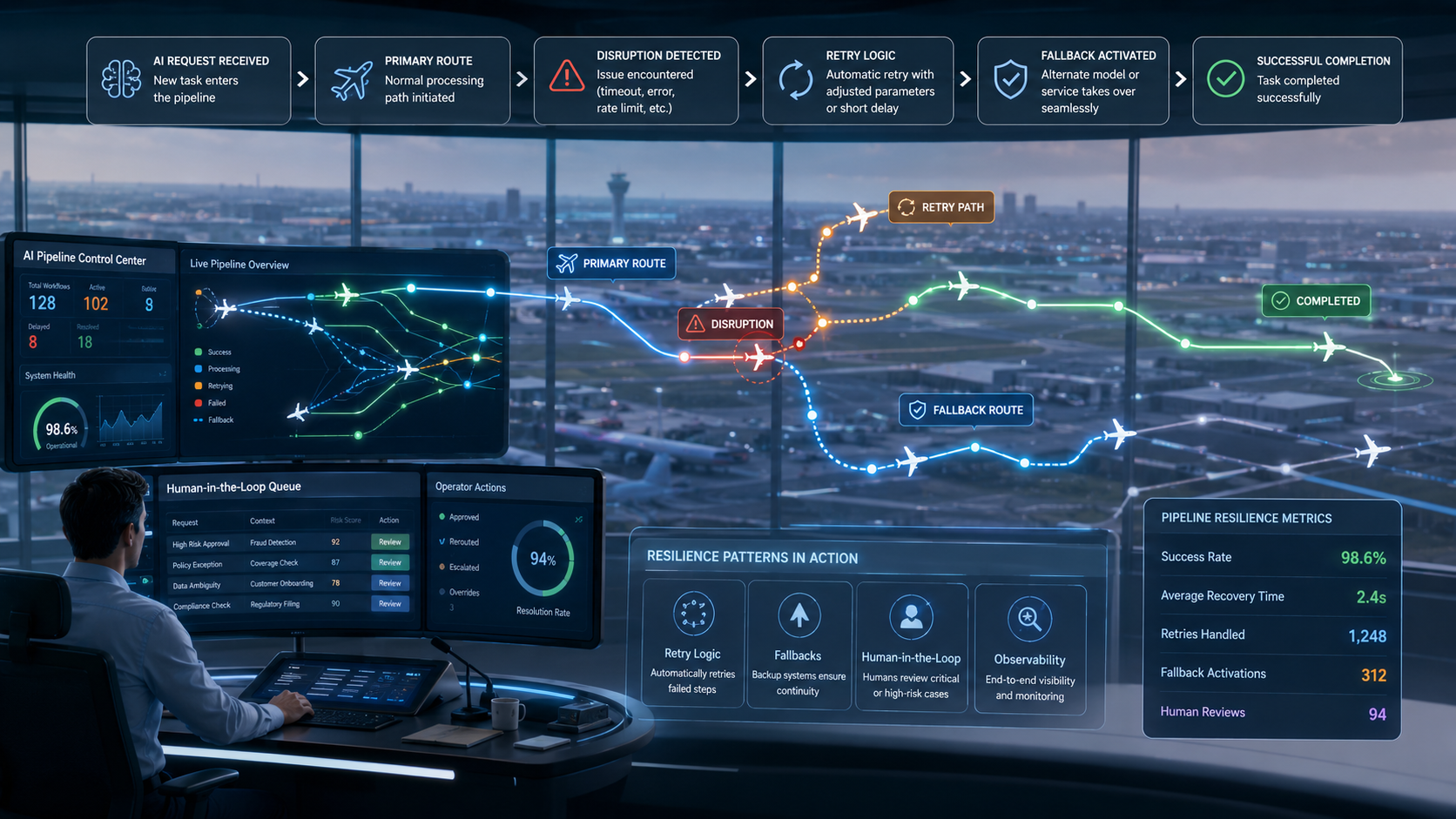
Choose LangGraph when your workflow has multiple decision points, requires state persistence across agent interactions, or needs human approval gates at specific transitions. It demands more setup but pays off in debuggability and production reliability.
Choose Microsoft AutoGen / MAF when agents need to debate, critique, or iteratively refine outputs in natural language. It excels at research workflows, hypothesis validation, and any scenario where the “right answer” emerges from agent conversation.
Choose CrewAI when you want to move fast, your workflow maps naturally to team roles, and your operators need to read and adjust agent definitions without writing code. Content production, customer service automation, and lead-scoring pipelines all fit this pattern.
The 2025 PRISMA-based survey by Abou Ali et al. (arXiv 2510.25445) confirms a clear pattern: symbolic/graph architectures dominate safety-critical applications, while neural/conversational systems thrive in data-rich, adaptive domains. Choose accordingly.
Frequently Asked Questions
Answers to the questions developers and CTOs ask most often about selecting, implementing, and scaling agentic AI frameworks in 2025.
Q1: What is the difference between LangGraph and LangChain?
LangChain provides the component toolkit, model wrappers, prompt templates, output parsers, and basic chain logic. LangGraph is LangChain’s graph-state orchestration layer for building stateful, multi-step agents. You can use LangGraph without LangChain, but the two pair well for production systems that need both flexible integrations and reliable orchestration.
Q2: Is Microsoft AutoGen still worth learning given it is now in maintenance mode?
Yes, AutoGen’s conversational multi-agent concepts transfer directly to its successor, Microsoft Agent Framework (MAF), which launched in October 2025 with stable APIs and long-term support. Teams already using AutoGen should plan a migration; new projects should target MAF from the start. The multi-agent conversation paradigm AutoGen pioneered remains the foundation of MAF.
Q3: Can I use LangGraph and CrewAI together in the same project?
Yes. Hybrid architectures are increasingly common. A typical pattern: use LangGraph for the stateful orchestration backbone and embed CrewAI crews as nodes inside the graph for role-based sub-tasks. CrewAI also ships native LangGraph integration in its examples repository. Mixing frameworks adds complexity, so validate the handoff points in staging before deploying to production.
Q4: Which agentic AI framework scales best to hundreds of parallel agents?
AutoGen and its successor, MAF, were designed with an asynchronous, distributed runtime at their core and handle high-concurrency multi-agent workloads well. LangGraph Platform offers scalable managed infrastructure for LangGraph deployments. CrewAI optimises for low resource overhead per agent. The real scaling bottleneck in all three is LLM API throughput and cost. Design your token budgets before worrying about framework scalability.
Q5: How do these frameworks handle security and prompt injection?
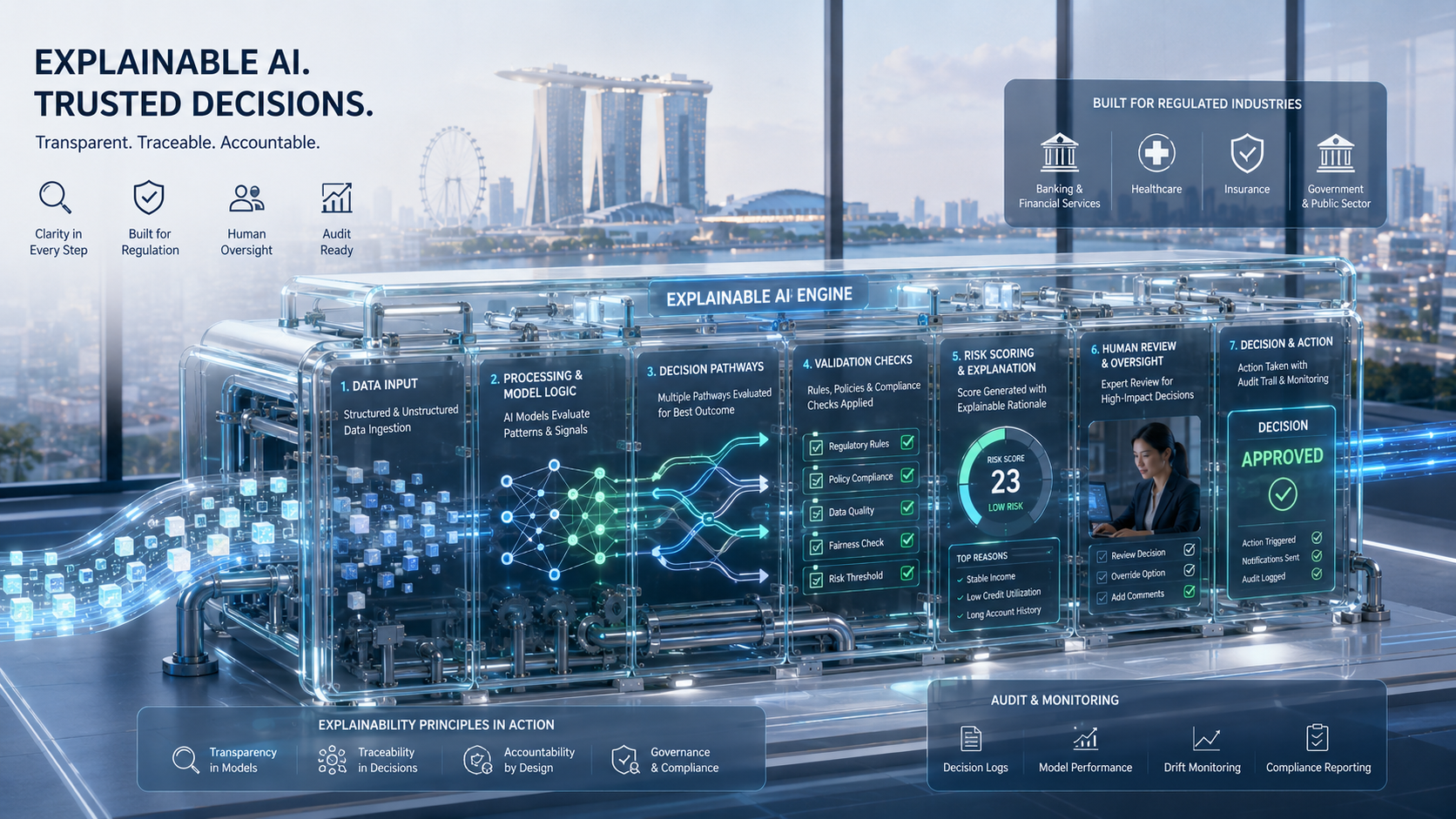
Gartner (June 2025) warns that over 40% of agentic AI projects will be cancelled by 2027 due to inadequate risk controls. None of the three frameworks provide complete out-of-the-box security. Best practice: scope tool permissions tightly, validate all tool outputs before passing to the next agent, add human-in-the-loop gates for high-impact actions, and instrument everything with an observability layer like LangSmith or CrewAI’s telemetry spans.
What This Means for Your Next Project
The framework you choose sets the ceiling on what your agents can reliably do in production, and the floor on how much debugging you will do to get there.
Three insights define the 2025 framework landscape. First, the agentic AI market is moving at a velocity that makes framework selection a time-sensitive decision: Gartner (August 2025) gives C-level executives three to six months to set their agentic AI strategy before being outpaced.
Second, orchestration philosophy matters more than feature checklists. LangGraph gives you state control; AutoGen/MAF gives you conversational flexibility; CrewAI gives you role clarity. Match the philosophy to your workflow, not to the framework’s GitHub star count.
Third, governance is not optional. Gartner (June 2025) projects that over 40% of agentic AI projects will be cancelled by 2027 due to escalating costs, unclear business value, or inadequate risk controls. The teams that will succeed are those that build observability, human oversight, and security into the architecture before they deploy, not after.
Are you building the infrastructure layer that will define how your organization operates for the next decade, or are you writing code that will need to be replaced in eighteen months?
About the Author: Imran Akthar

Related Posts